IGF-1 LR3 (insulin-like growth factor-1 long arginine 3) is a synthesized insulin-like growth factor-1 construct. It stimulates cell growth and division while also promoting protein synthesis and anabolism via attaching to the IGF-1 receptor. According to research, IGF-1 LR3 has the ability to improve muscle repair and hypertrophy, promote fat metabolism, and inhibit myostatin.
IGF 1LR3 is a synthetic analog of insulin like growth factor 1 studied in laboratory research involving cellular growth, muscle tissue signaling, protein synthesis, glucose uptake, body composition, and tissue repair pathways.
Compared with native IGF 1, IGF 1 LR3 is commonly studied for its modified structure, longer half life, and reduced interaction with IGF binding proteins. These properties make it relevant for research models focused on cell growth, cell division, muscle repair, metabolic health, and cellular regeneration.
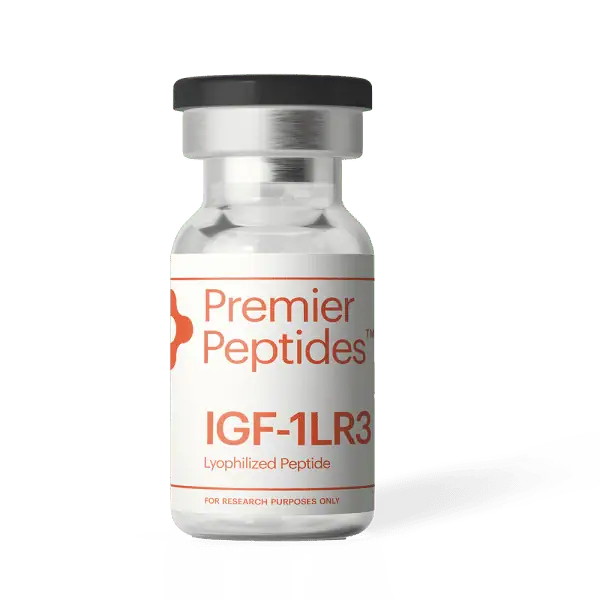
PremierPeptides™ supplies IGF-1LR3 under strict quality control standards for laboratory and scientific research only.
IGF 1 LR3 and Insulin Like Growth Factor Research
IGF 1 LR3 is studied as a modified version of insulin like growth factor 1. Natural IGF 1 is produced in response to growth hormone and is involved in biological processes connected to growth, metabolism, glucose regulation, and tissue development.
In research settings, IGF 1LR3 may be evaluated for its relationship to:
IGF receptor activity
Cellular growth and cell proliferation
Protein synthesis pathways
Muscle tissue signaling
Glucose uptake models
Fat metabolism research
Muscle repair and recovery pathways
Body recomposition and lean mass models
The Long R3 modification is often discussed because it may bind poorly to IGF binding proteins compared with native IGF 1, allowing researchers to study IGF receptor signaling over a longer period in controlled experimental models.
Muscle Growth and Muscle Hypertrophy Research
IGF 1LR3 is frequently discussed in muscle growth research because insulin like growth factor pathways are connected to muscle tissue development, protein synthesis, satellite cell activation, muscle repair, and muscle hypertrophy models.
Research interest often focuses on how IGF-related signaling may affect:
Lean muscle mass
Muscle regeneration
Muscle breakdown markers
Muscle recovery pathways
Cellular repair
Growth factor activity
Exercise-related tissue response models
Because IGF signaling plays a role in tissue growth and repair, IGF-1LR3 research can intersect with lean tissue signaling studies where investigators examine muscle mass, protein synthesis, and anabolic pathway research.
This product is not intended to increase muscle mass, improve muscle strength, support bodybuilding, or enhance physical performance in humans.
Muscle Recovery and Enhanced Recovery Models
IGF 1LR3 may also be studied in relation to muscle recovery, tissue repair, cellular repair, and recovery time after mechanical stress models.
Researchers may evaluate IGF-related pathways in connection with:
Muscle repair
Tissue repair
Cellular regeneration
Post-stress recovery models
Growth factor signaling
Recovery-related protein synthesis
These research applications may overlap with tissue repair models, especially where investigators are studying cellular recovery, inflammation response, and repair pathway activity.
PremierPeptides™ does not make claims about injury recovery, enhanced recovery, exercise performance, or therapeutic use.
Glucose Uptake and Metabolic Health Research
Insulin like growth factor pathways are closely related to glucose uptake, insulin sensitivity, glucose regulation, energy use, and metabolic health research.
IGF 1LR3 may be studied in experimental models involving:
Glucose uptake in muscle tissue
Insulin sensitivity pathways
Insulin resistance models
Energy use and nutrient partitioning
Fat metabolism
Fat breakdown research
Body composition markers
Because body composition research often examines lean mass, body fat, glucose response, and metabolic optimization together, IGF-1LR3 may be relevant to metabolic pathway research when studied under appropriate laboratory conditions.
No weight loss, fat loss, body recomposition, or metabolic benefit claims are made for human use.
Body Composition and Lean Mass Research
Body composition research looks beyond body weight alone. Researchers may evaluate lean mass, body fat, muscle wasting models, muscle breakdown markers, metabolic response, and growth factor activity.
IGF 1LR3 is often discussed in relation to body composition because IGF pathways may influence muscle tissue signaling, protein synthesis, nutrient partitioning, and glucose uptake in experimental models.
Research involving IGF 1LR3 may examine:
Lean body mass models
Muscle wasting research
Body recomposition pathways
Fat metabolism markers
Cellular growth and repair
Growth hormone and IGF pathway interaction
These are laboratory research applications only. IGF-1LR3 is not supplied for peptide therapy, weight loss, muscle growth, anti aging, or human body composition use.
Anti Aging and Cellular Regeneration Context
IGF pathways are sometimes discussed in anti aging research because of their relationship to cellular growth, tissue repair, metabolic function, muscle maintenance, and age-related changes in growth factor signaling.
However, this research context should be interpreted carefully. Increased growth factor signaling may raise important safety questions depending on the model, exposure level, and biological environment.
IGF 1LR3 research may involve cellular regeneration, tissue repair, and recovery pathways, but PremierPeptides™ does not position this product for anti aging use, longevity use, wellness, or medical treatment.
Benefits of IGF Research vs Human-Use Claims
Searchers often look for the benefits of IGF, IGF 1LR3 results, muscle growth outcomes, fat loss effects, or body recomposition claims. For PremierPeptides™, the distinction is clear: this product is for research use only.
In laboratory settings, IGF 1LR3 may be studied for mechanisms involving:
Cell proliferation
Protein synthesis
Muscle tissue signaling
Glucose uptake
Cellular repair
Fat metabolism
Growth factor pathway activity
These mechanisms do not establish human benefits. Research activity does not mean IGF-1LR3 is approved for peptide therapy, fitness use, muscle hypertrophy, fat loss, recovery, or medical treatment.
Bacteriostatic Water and Laboratory Preparation Context
Some research workflows involving lyophilized peptides may reference bacteriostatic water, sterile handling, vial preparation, or laboratory dilution procedures.
PremierPeptides™ does not provide reconstitution instructions, dosage calculations, injection guidance, cycle recommendations, or human-use preparation advice.
Researchers should follow applicable laboratory procedures, institutional safety standards, product-specific documentation, and approved handling requirements when working with research materials.
Research Safety and Potential Risks
IGF 1LR3 is biologically active and should be treated with appropriate research caution.
In broader peptide therapy and experimental-use discussions, IGF-related compounds may be associated with concerns involving glucose regulation, hypoglycemia, insulin resistance, fluid retention, water retention, joint stiffness, organ growth, and unwanted cell proliferation.
Because IGF pathways are involved in cell growth and division, long-term or uncontrolled exposure may raise important safety questions in models involving tumor growth, pre-existing cancer cells, or abnormal cellular proliferation.
PremierPeptides™ does not provide medical supervision, safety assessments for human use, dosing support, or healthcare provider guidance. This product is supplied strictly for controlled research environments.
Quality Standards for IGF 1 Research
Research accuracy depends on product quality. Small differences in peptide identity, purity, storage, handling, or batch consistency can affect study outcomes.
PremierPeptides™ focuses on:
Third-party tested research peptides
Minimum stated purity of 99%+
Carefully selected raw materials
Clear product details
Consistent batch quality
Strict research-use positioning
Fast Canada-wide delivery
Secure checkout
As a Canadian research peptide supplier, PremierPeptides™ is built for researchers who value clarity, consistency, and professional product standards.
Research-Use Compliance
IGF-1LR3 is supplied strictly for laboratory and scientific research.
This product is not intended for:
Human consumption
Animal use
Injection
Subcutaneous injection
Peptide therapy
Medical treatment
Muscle growth use
Fat loss use
Weight loss use
Anti aging use
Bodybuilding use
Body recomposition use
In Canada, injectable peptides and therapeutic peptide products may require Health Canada authorization and a valid Drug Identification Number when intended for human use.
PremierPeptides™ does not provide dosing instructions, injection protocols, treatment recommendations, medical advice, or peptide therapy guidance.
FAQs
What is IGF 1LR3?
IGF 1LR3, also known as IGF 1 LR3, is a synthetic analog of insulin like growth factor 1 studied in laboratory research involving cell growth, protein synthesis, glucose uptake, muscle tissue signaling, and tissue repair pathways.
How is IGF 1LR3 different from IGF 1?
IGF 1LR3 is a modified version of IGF 1. It is commonly studied because it has reduced binding to IGF binding proteins and a longer active research window compared with native IGF 1.
Is IGF-1LR3 studied for muscle growth?
Yes. IGF-1LR3 is studied in relation to muscle growth pathways, protein synthesis, satellite cell activation, muscle repair, muscle hypertrophy models, and lean muscle mass research. It is not supplied for human muscle growth use.
Is IGF-1LR3 studied for muscle recovery?
IGF-1LR3 may be studied in relation to muscle recovery, cellular repair, tissue repair, and growth factor activity. These are research applications only and should not be interpreted as recovery benefits for humans.
Does IGF-1LR3 affect glucose uptake?
IGF-related pathways are studied in relation to glucose uptake, insulin sensitivity, glucose regulation, and metabolic health models. PremierPeptides™ does not make human metabolic or health claims.
Is IGF-1LR3 used for fat loss?
IGF-1LR3 may be studied in relation to fat metabolism, nutrient partitioning, body composition, and energy use. It is not supplied as a fat loss product, weight loss product, or body recomposition product.
Does IGF-1LR3 require bacteriostatic water?
PremierPeptides™ does not provide reconstitution or preparation instructions. Researchers should follow approved laboratory protocols, institutional standards, and product-specific documentation.
What are the potential risks of IGF-1LR3?
IGF-related compounds may raise research safety questions involving glucose regulation, hypoglycemia, insulin resistance, water retention, fluid retention, abnormal cell growth, and long-term pathway effects. Medical questions should be directed to a licensed healthcare provider.
Is IGF-1LR3 for human use?
No. PremierPeptides™ IGF-1LR3 is supplied strictly for laboratory research. It is not intended for human consumption, animal use, injection, peptide therapy, treatment, bodybuilding, weight loss, or anti aging use.
Is IGF-1LR3 available in Canada?
PremierPeptides™ supplies IGF-1LR3 in Canada for laboratory and scientific research only, with premium quality standards and Canada-wide fulfillment.
Disclaimer
Unauthorized health products have not been approved by Health Canada, which means that they have not been assessed for safety, efficacy and quality and may pose a range of serious health risks. They may contain high-risk ingredients, such as prescription or controlled drugs, and additives or contaminants that may or may not be listed on the label.
The level of active ingredients could be higher or lower than claimed and these ingredients could interact with other medications and foods. Prescription drugs should only be used under the care of a licensed health care professional because they are intended to treat specific conditions and may cause serious side effects. Prescription drugs can only be legally sold to consumers in Canada with a prescription.
Size
0.1mg, 1mg
Reviews
There are no reviews yet.
Only logged in customers who have purchased this product may leave a review.

 Free Shipping Canada-Wide On Orders Over $300. Quality Assured.


Reviews
There are no reviews yet.